S/P2 TRAINING
Quality online training for Automotive, Collision, Heavy-Duty/Diesel, Construction, Cosmetology, Culinary, Welding, HR, Sustainability, and more.
Used by more than 225,000 students and employees every year!
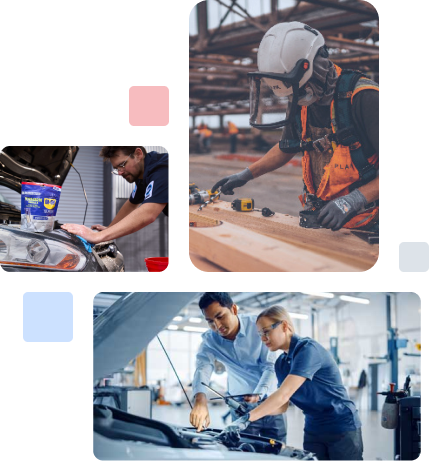

Consistent delivery of content across devices, accessible anywhere, 24/7.

Compliance credentials like OSHA, EPA, and WD-40® through partnerships.

Train all your students or employees for one fixed annual price.

Quality training for safe, productive schools and workplaces across all industries.
OSHA 10-hour training teaches basic safety and health information to entry-level workers in construction and general industry.
OSHA 30-Hour training for construction and general industry prepares supervisors and workers to avoid safety and health risks in the workplace.
In addition to S/P2 safety and environmental training, we offer a variety of third-party credential opportunities through our partners.
Develop the automotive skills employers are looking for. Learn how to avoid shop hazards, comply with OSHA and EPA requirements, and more.

S/P2 helps schools and businesses reduce risk and instill cultures of safety in industries such as automotive service, collision repair & refinish, heavy-duty/diesel, welding, construction, cosmetology, culinary, and more.
With more than 225,000 graduates annually, our 100% online training teaches students and employees about workplace safety and OSHA and EPA compliance before they start to work. In addition to school and business bundles for workplace safety and industry-specific environmental courses, we also offer training in ethics, Human Resources, sustainability, and professional skills.
“The S/P2 program provides all my high school automotive students with not only the skills they need to be successful with their automotive career, but real credentials to place in their professional portfolio when going on interviews. I have been satisfied with the results and have been utilizing the S/P2 program with all my students since 2009.”

Michelle B. - Instructor
Winder, Georgia
“S/P2 safety training has been a great asset to my automotive program. It meets the needs of several different learning styles of my students; the content is clear and relevant and meets the objectives of my program. Safety is priority No. 1 and S/P2 helps me make that possible for my students. It's also great that the students get a certificate after they pass the course.”
David W., Automotive Instructor
Burns Flat, Oklahoma
“I was looking for a safety program that was designed for the cosmetology industry when I found your information in my industry magazine. What I found valuable for me and my students is the reinforcement of the information I have already given them. I can say 100 times to sanitize, but having a national company say it reinforces why I said it. I would love for S/P2 to become a nationally recognized certification that employers look for when hiring a stylist.”
Patti E., Cosmetology Instructor
Bradford, Vermont
“Good to know all the safety hazards and risks at the workplace and the precautions in this safety training.”
Desh T., Student
New Hartford, New York
“The S/P2 courses were easy to understand and organized.”
Terry S., Automotive Instructor
Farmington, New Mexico
“We are a high school and we use S/P2 because the colleges surrounding our school use this product, so students are seeing the value of it.”
Kenneth B., Automotive Instructor
Brigham City, Utah